 LifeAdmin
First, identify the kind of letter
A Mahnung is a payment reminder from a company or creditor. An Inkassoschreiben is a debt-collection demand. A Mahnbescheid is a formal court payment order, commonly served in a yellow envelope. The court generally checks the application formally; it does not establish that the debt is valid. A later Vollstreckungsbescheid can create a basis for enforcement. See our ordinary Mahnung guide for the earlier stage.
From reminder to court procedure
Mahnung
Creditor asks for payment.
Mahnbescheid
Court issues a formal payment order; check the service date.
Vollstreckungsbescheid
May follow if the claim is not resolved or challenged.
This is a simplified possible sequence, not a guarantee that every case follows all three steps.
Your first 15-minute checklist
- Keep the envelope. Photograph the yellow envelope and note the delivery date.
- Read the court name and case reference (Aktenzeichen). Verify suspicious contact details independently using the official court website.
- Separate the amounts: principal claim (Hauptforderung), interest (Zinsen), court fees and collection costs.
- Compare the claim with your contract, invoices, cancellations and bank transfers.
- Find the enclosed Widerspruch form. Do not mistake a complaint to the creditor for a formal objection to the court.
- Act before the deadline. If you need advice, get it urgently rather than waiting until the last day.
What should you do if the claim is correct?
Check the full breakdown, including any additional fees. Where the amount is genuinely owed, arrange prompt payment using verified payment details. If you cannot pay, seek debt counselling quickly; an objection made solely to gain time can increase costs if the dispute proceeds to court. Ask for advice if you disagree only with extra charges.
What if the claim is wrong or already paid?
You can generally object to all or part of a Mahnbescheid. Use the Widerspruch form supplied with the notice, identify the case correctly, and send it to the issuing court so it arrives within the applicable deadline. Keep proof of dispatch and copies. An objection does not itself decide who is right: the creditor may pursue the claim in ordinary civil proceedings, where evidence matters.
What happens if you miss the two weeks?
The creditor may apply for a Vollstreckungsbescheid. If you receive that second court notice, a separate Einspruch period of generally two weeks after service applies. The procedure and consequences differ from a Mahnbescheid, so do not use the wrong form or wait for a reminder. If a deadline has already passed, obtain legal advice immediately about any remaining options, including whether exceptional relief may apply.
German words to recognize
- Zustellung: formal service of the document.
- Widerspruch: objection against the Mahnbescheid.
- Einspruch: objection against a Vollstreckungsbescheid.
- Hauptforderung: principal amount claimed.
- Aktenzeichen: court case reference.
- Teilwiderspruch: objection to part of the claim.
Keep the letter, explanation and next step together
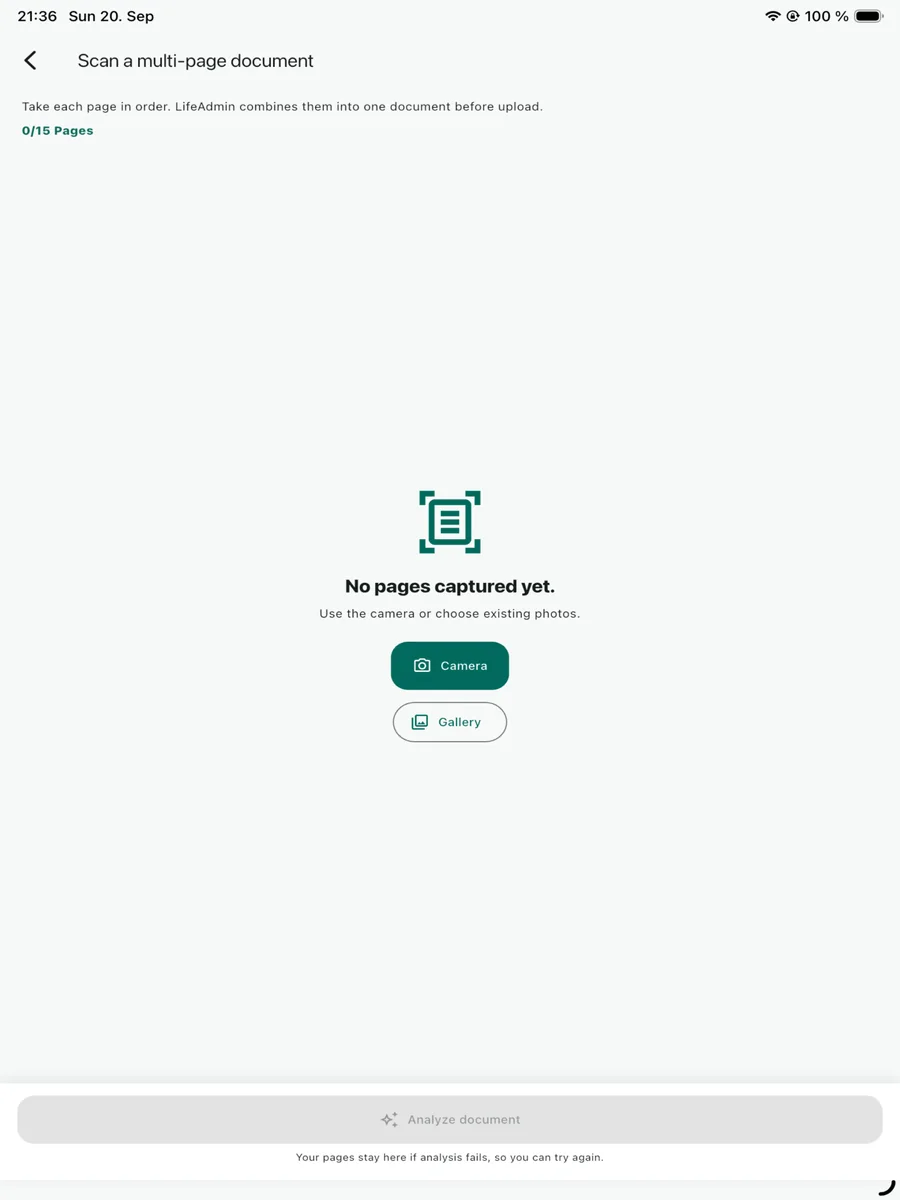
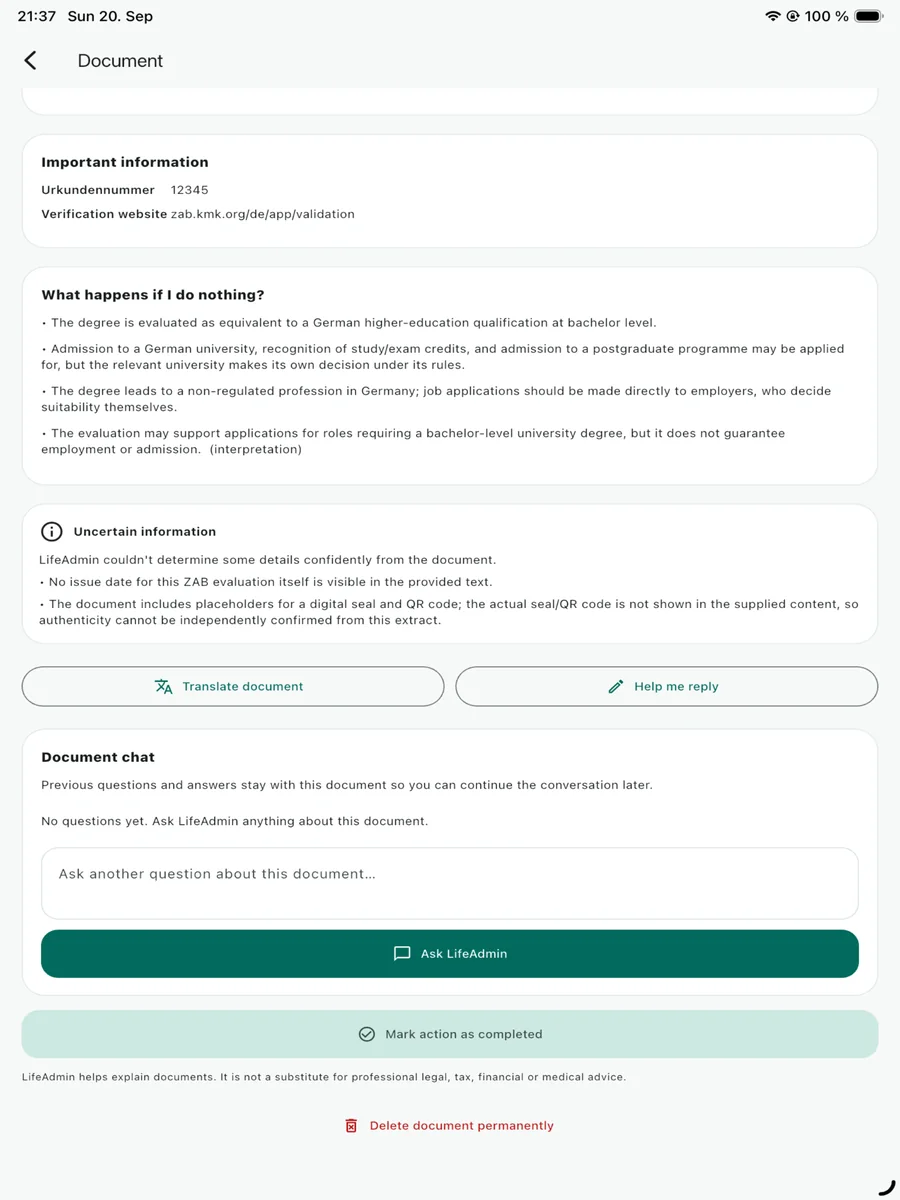
Scan or upload the notice to understand the German wording, identify dates and organize follow-up questions. Always verify a legal deadline against the original court document; an AI summary is not a substitute for legal advice.
Frequently asked questions
Does a yellow envelope mean I already lost a court case?
No. A Mahnbescheid does not mean the court has examined and confirmed the debt. But it is a formal procedure with consequences if ignored.
Can I just email the creditor to dispute it?
Do not rely on that. The formal Widerspruch must reach the issuing court in an accepted form. Follow the court's instructions and seek advice about submission methods.
Can I object only to the collection fees?
A partial objection may be possible. Specify clearly which part you dispute, and check the official form and guidance.